

Have you ever wondered how our bodies function in space? How cells adapt to life in microgravity? The answers to these questions could have a huge impact on the future of space medicine and planetary exploration! That’s why we want to tell you about our project GraviTE (Gravity-free Tissue Engineering).
When we started our work, we had two goals in mind – we wanted to investigate how bone cells respond to a special scaffold made of biomaterial under microgravity conditions, and we wanted to participate in the development of gravity-dependent tissue engineering techniques. Thanks to GraviTE, we hope to better understand how cells behave in altered gravity, which is crucial for the health of astronauts and tissue regeneration in space. Our project was inspired by the real-life actions of space agencies – ESA believes that tissue engineering could be key to planetary exploration, and these techniques could also benefit Earth. As you can imagine, simulating microgravity on Earth is a truly cosmic challenge. The devices used for simulation create additional disturbances. Our savior might be the ISS, which provides the opportunity to work in true microgravity, allowing for accurate results. First, we need to develop a device – a bioreactor for cell culture on the ISS and conduct numerous tests. Only then will it be possible to grow cells on a polymer scaffold in a small bioreactor.
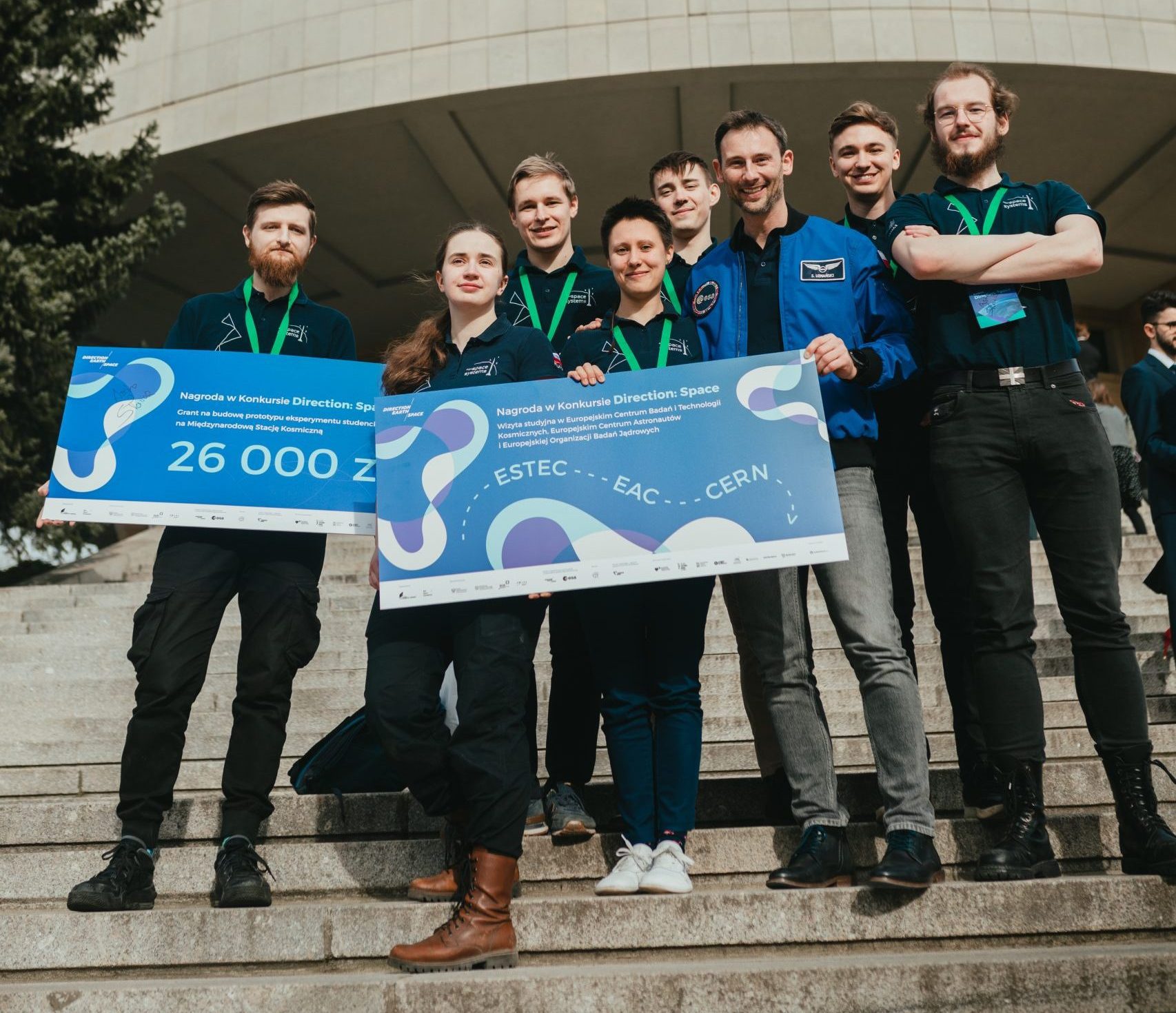
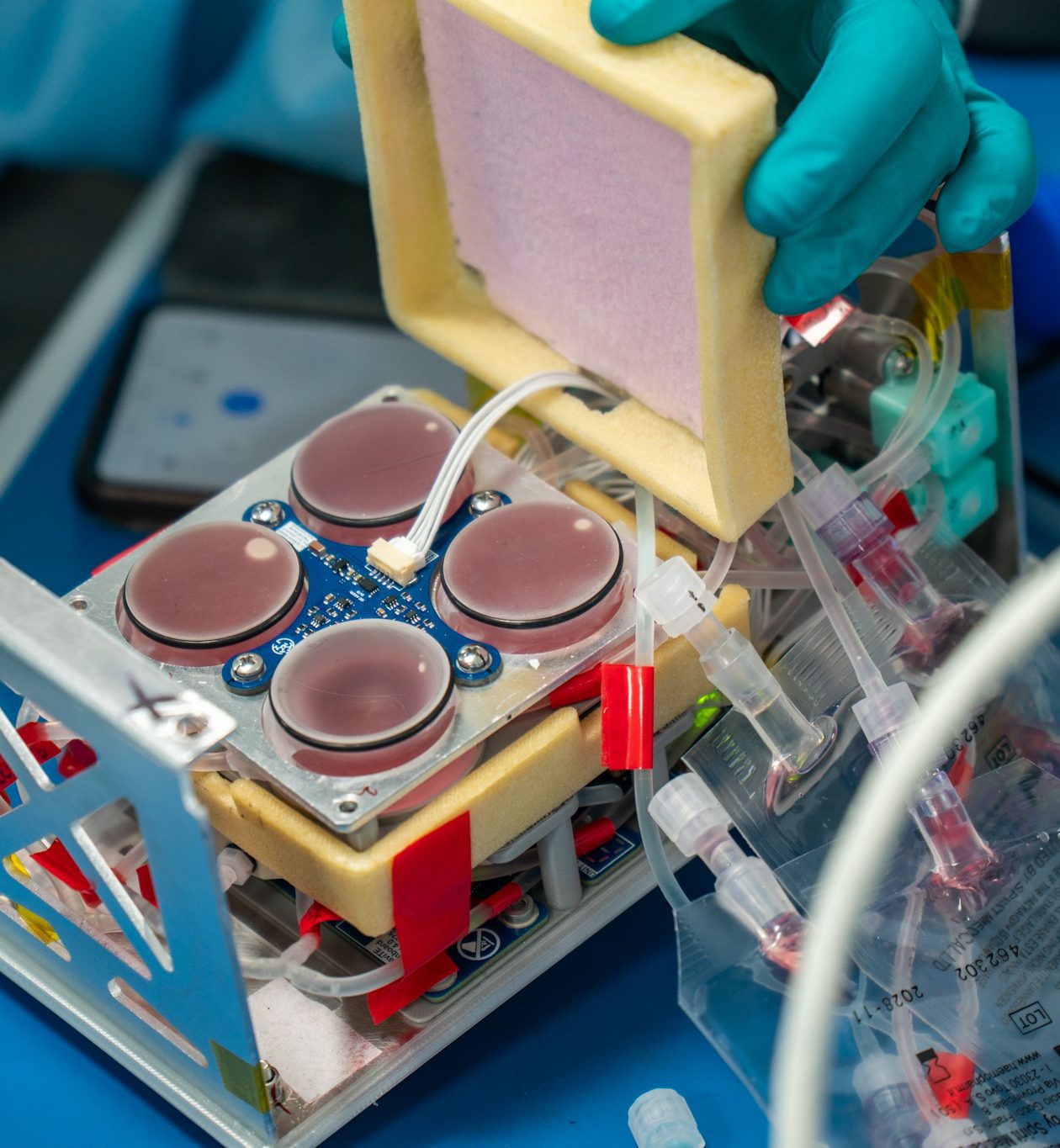
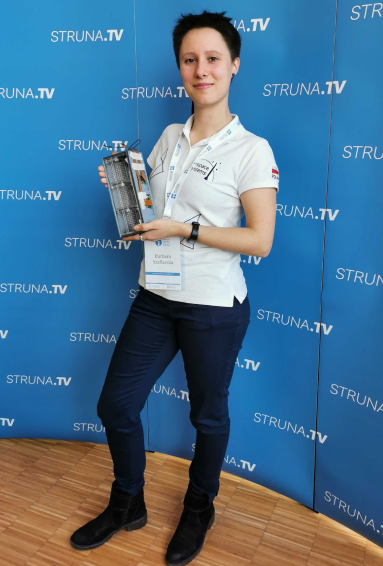
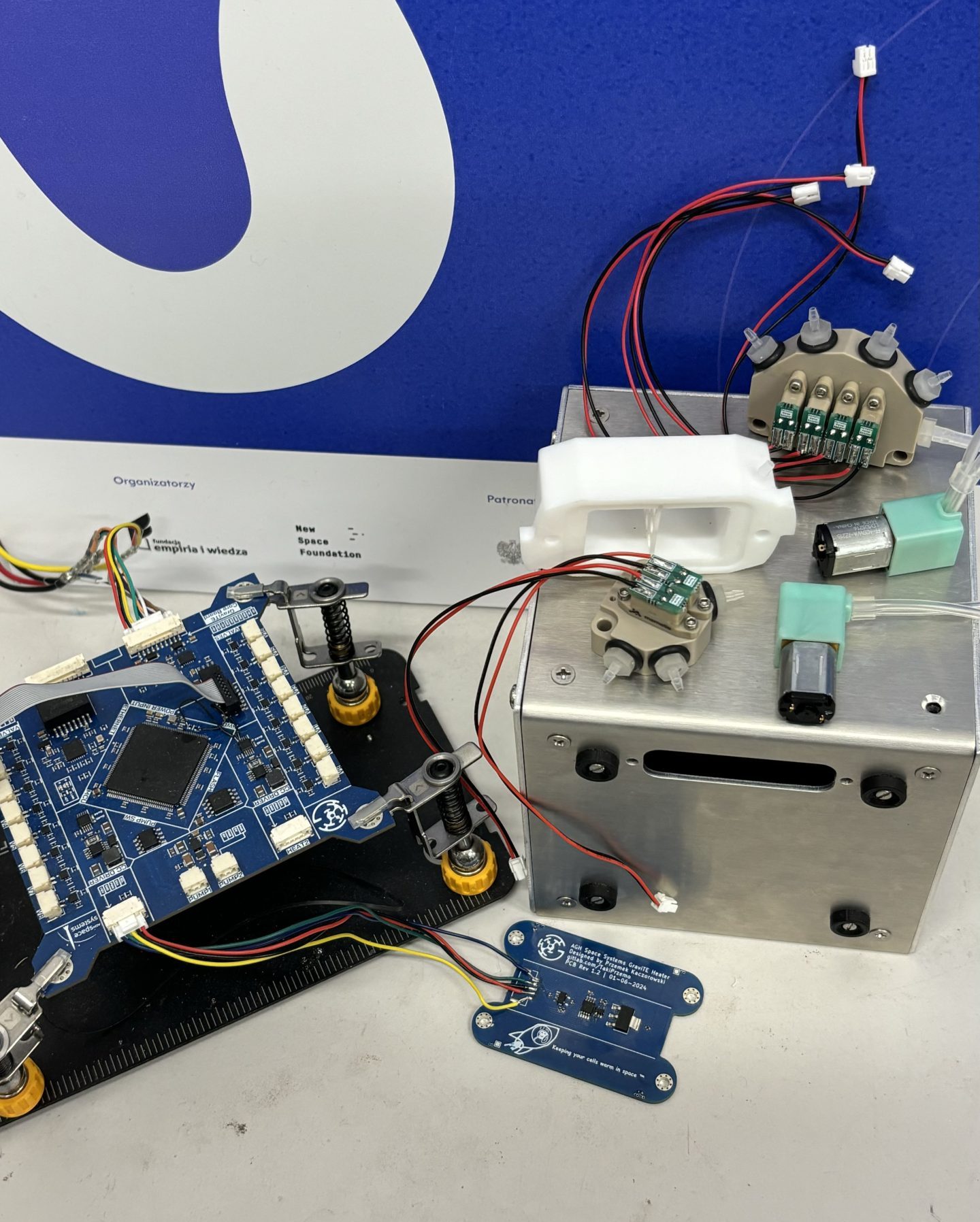
The device we have developed will automatically exchange the culture medium and preserve the samples, while also maintaining the temperature and collecting data. After the cultivation in space, the samples will return to Earth and be examined for viability, proliferation, adhesion to the scaffold, and differentiation. The same tests will be conducted on control samples left on Earth under identical conditions. Although there is still a long way ahead of us, we are extremely excited about the initial successes of our project. Not long ago, the project was chosen as one of the three winners of the Direction: Space competition, initiated by Polish astronaut Dr. Sławosz Uznański, with the organizers being the Empiria and Knowledge Foundation and the New Space Foundation. Thanks to this, we are one step closer to conducting research in true microgravity conditions!
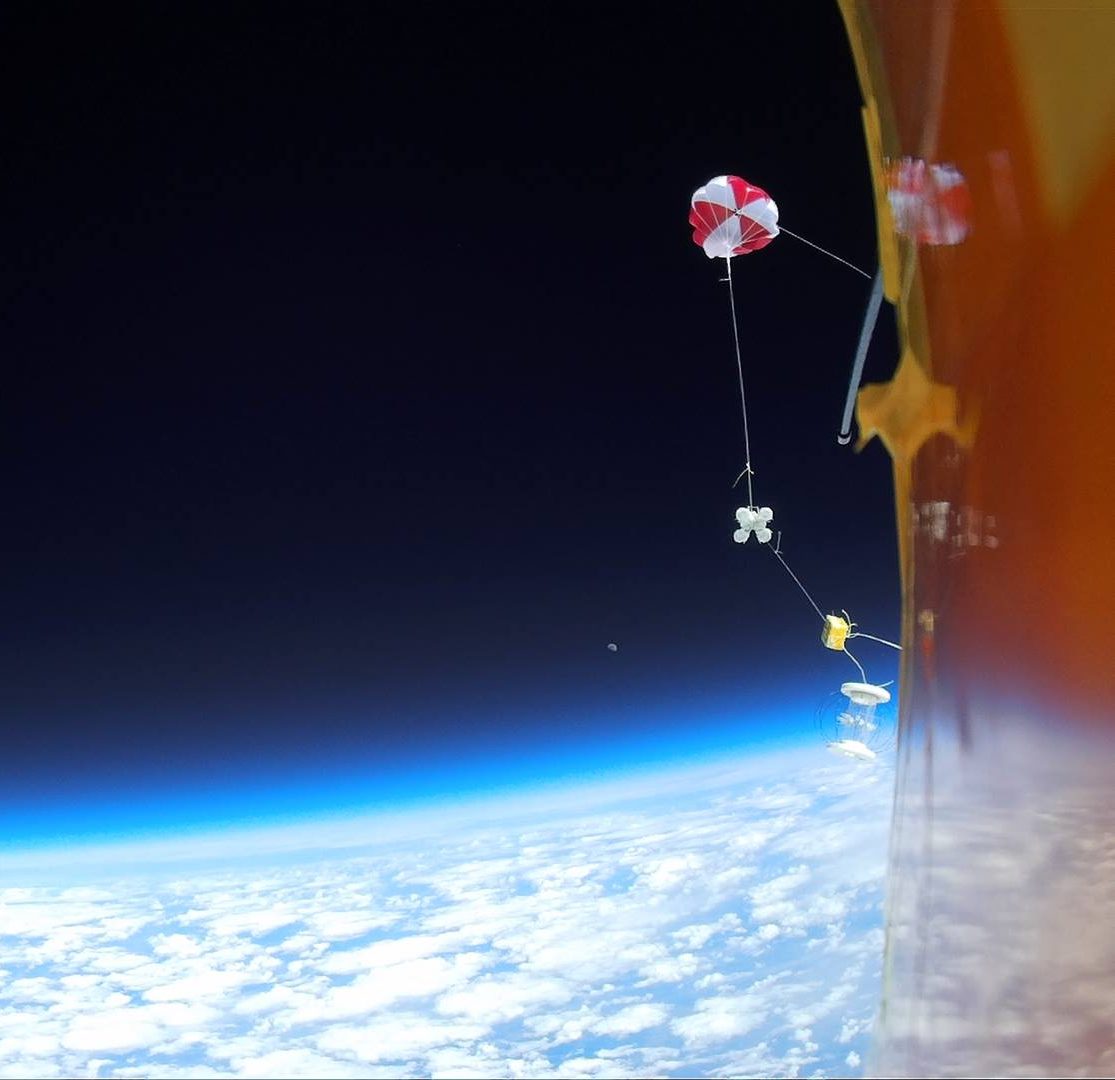
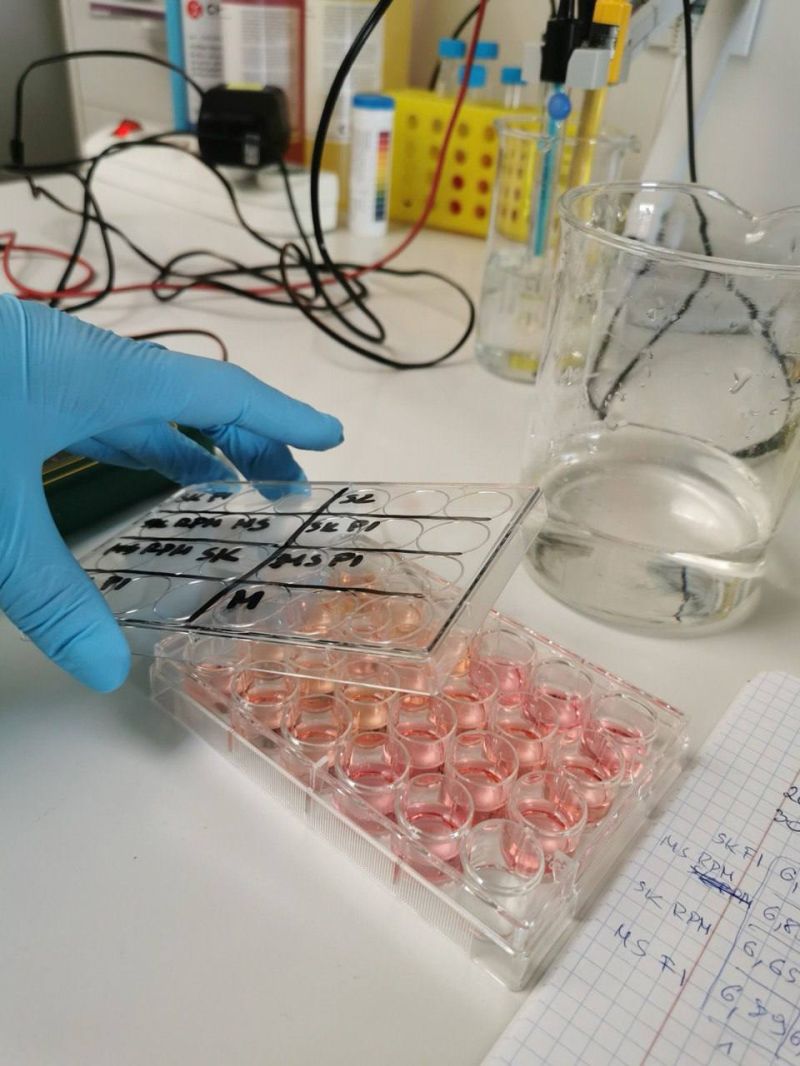
The Balloon and Rocket Experiments Section is still developing the project, which has already contributed to the creation of a master’s thesis. Conducting the study in our earthly conditions is not simple. In the next post, we will tell you what we have already done here on Earth and present our achievements in the project with a more detailed description.
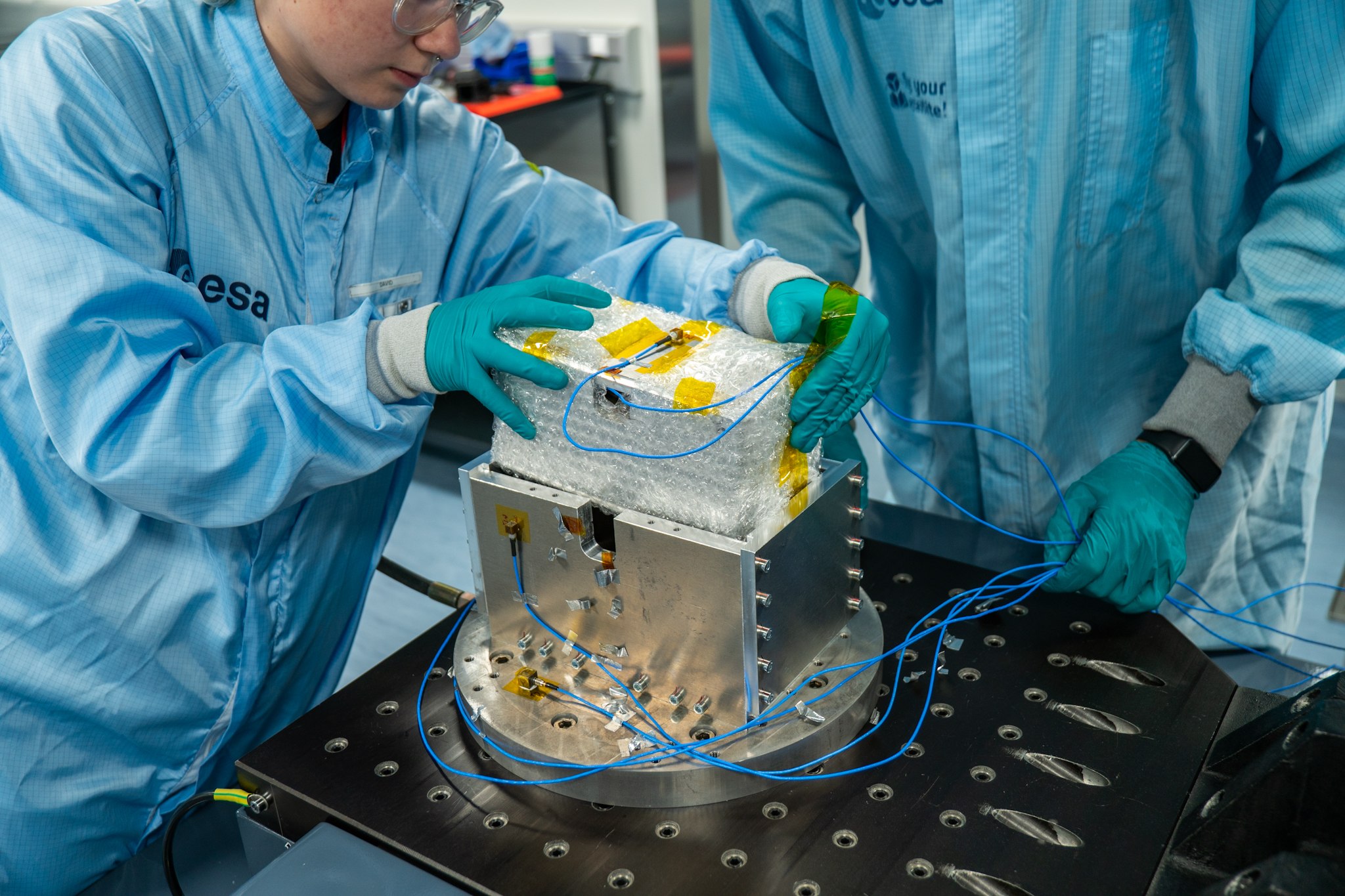
PREPARING THE EXPERIMENT
At ESA ESTEC, the GraviTE team worked on the integration and preparation of the experiment for the next qualification stages. The bioreactor is designed to maintain suitable conditions for bone-cell culture, automatically exchange the culture medium, preserve the samples and collect data during the mission. Every component must be carefully verified before the experiment can be approved for flight to the International Space Station.

GraviTE AT THE IGNIS CONFERENCE
GraviTE was presented during the IGNIS – Trajectories of the Future conference. Visitors had the opportunity to learn more about the experiment, its scientific objectives and the preparations for its mission to the International Space Station. Our stand was visited by ESA Director General Josef Aschbacher, Polish astronaut Sławosz Uznański-Wiśniewski and Minister Andrzej Domański.
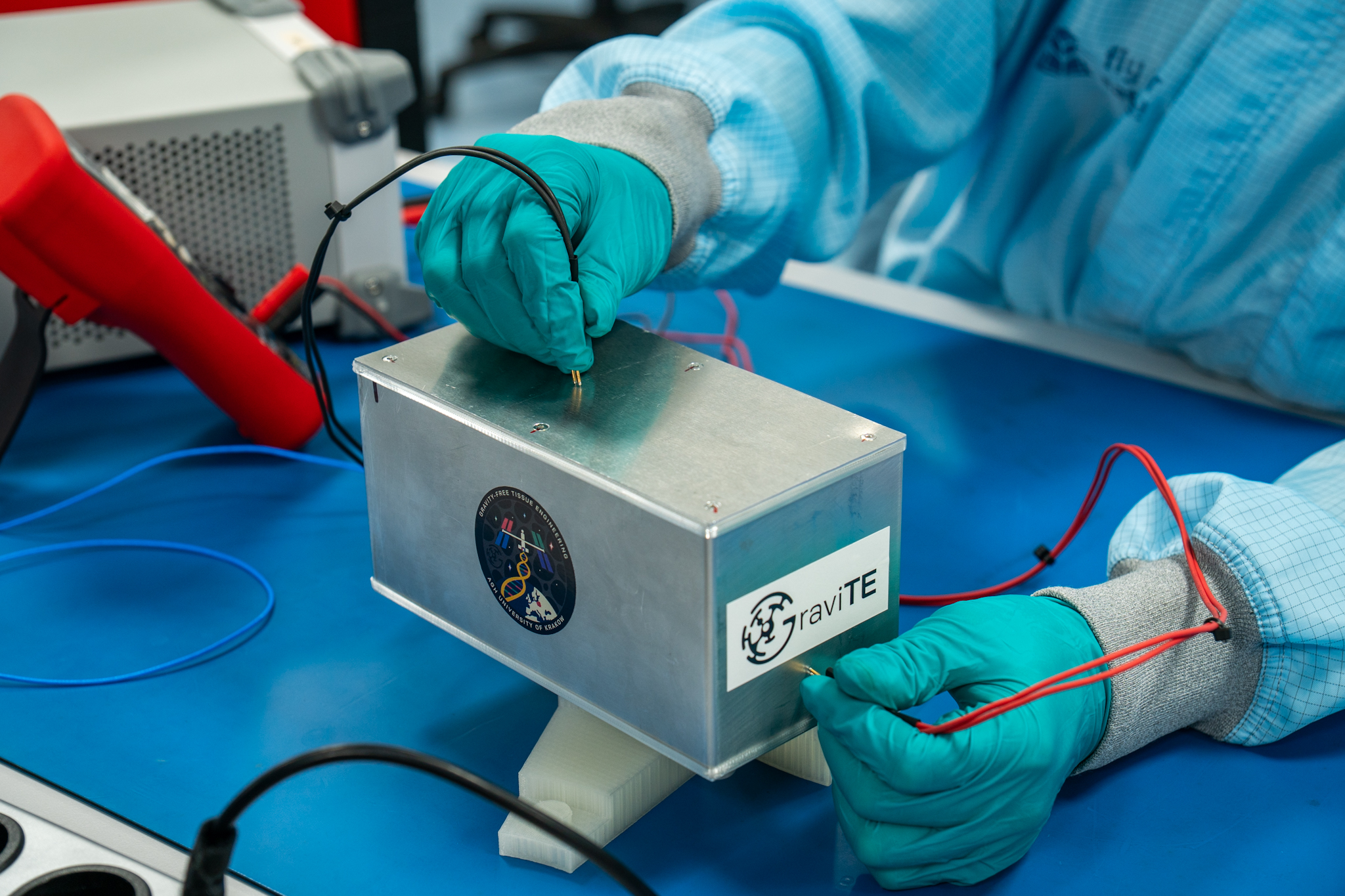
SUCCESSFUL VIBRATION TESTS
The GraviTE experiment successfully completed vibration tests at ESA ESTEC. During the campaign, the payload was exposed to mechanical loads simulating the conditions expected during a rocket launch. Passing the tests confirmed the mechanical integrity of the experiment and marked another important step towards flight readiness.

THE GRAVITE MISSION PATCH
The GraviTE mission patch combines the most important elements of the project: the International Space Station, a DNA helix, bone cells and Europe with Poland highlighted. Its design represents the connection between space exploration, tissue engineering and the Polish origin of the experiment. The phrase “Gravity-Free Tissue Engineering” reflects our goal of investigating how bone cells behave in microgravity.